
What Happens If You Are Too Heavy for an Electric Scooter?
An electric scooter weight limit is an important specification that affects safety, performance, and overall riding experience. Every electric scooter is designed to support a specific maximum load, and exceeding that limit can affect acceleration, braking, battery range, handling, and component durability.
But what actually happens if you are too heavy for an electric scooter? Is the weight limit a strict safety requirement, and how should you choose a scooter based on rider weight?
In this guide, we explain how electric scooter weight limits work, what can happen when the rated capacity is exceeded, and what to consider when choosing an electric scooter for different riders and operating conditions.
What Is the Weight Limit on an Electric Scooter?
The electric scooter weight limit, also called the maximum load or weight capacity, is the maximum total load that the manufacturer specifies for a particular scooter. This typically refers to the rider and any additional load carried on the scooter.
The rated capacity is determined by the scooter's overall design, including its frame, deck, stem, suspension, tires, braking system, motor, battery, and other structural components. Because these components work together, the weight limit should not be treated as an arbitrary number.
For this reason, the most reliable way to determine an electric scooter's weight capacity is to check the manufacturer's specifications for the specific model. Weight limits can vary significantly between models, even when the scooters have similar dimensions or motor power.
How Much Weight Can an Electric Scooter Hold?
There is no single weight limit that applies to all electric scooters. Consumer commuter models, performance scooters, and heavy-duty commercial models can have very different maximum load ratings.
As a general market reference, some electric scooters are designed for loads around 220 lbs (100 kg), while higher-capacity models may support approximately 265–300 lbs (120–136 kg) or more. Heavy-duty and commercial models can be designed for higher loads depending on their frame construction, suspension, tires, braking system, and intended operating environment.
These figures should only be used as general reference points. The manufacturer's rated maximum load for the specific scooter should always take priority.
When evaluating an electric scooter, consider the total expected load rather than looking only at rider weight. Clothing, bags, equipment, and other carried items can also contribute to the load placed on the scooter.
What Happens If You Exceed the Electric Scooter Weight Limit?
Exceeding an electric scooter's rated weight capacity does not necessarily mean that the scooter will immediately fail. However, operating beyond the manufacturer's specification can change how the scooter performs and can place additional stress on components.
The effects can become more noticeable depending on the amount of excess load, riding speed, road conditions, inclines, braking frequency, and how frequently the scooter is used.
1. Reduced Speed and Acceleration
One of the first noticeable effects of additional weight is reduced acceleration. The motor has to move a greater total mass, so the scooter may take longer to reach its intended speed.
Performance can be particularly noticeable when starting from a stop or riding uphill. A scooter that performs well for a rider within its rated capacity may feel significantly less responsive when carrying a heavier load.
2. Shorter Battery Range
Additional load generally requires more energy to move, which can reduce the distance an electric scooter travels on a single charge.
The actual effect on range depends on several factors, including rider weight, terrain, speed, temperature, tire pressure, riding style, and battery condition. Hills and frequent acceleration can make the difference more noticeable.
3. Greater Motor and Electrical System Stress
A heavier load can require the motor and related electrical systems to work harder, particularly during acceleration and climbing.
Repeated operation under higher loads can also increase thermal and mechanical demands on the system. This is one reason why the manufacturer's rated capacity matters when selecting an electric scooter for regular use.
4. Longer Braking Distance
A heavier total load can affect braking performance because the braking system has more mass to slow down. Under otherwise similar conditions, a heavier load can require more distance to stop.
Road surface, tire condition, speed, brake design, and weather also influence braking distance. Riders should therefore maintain an appropriate speed and leave sufficient stopping distance, especially when operating near the scooter's maximum rated capacity.
5. Increased Tire and Suspension Stress
Tires and suspension components absorb much of the load and impact generated during riding. A heavier load can increase the forces acting on these components, particularly when riding over uneven surfaces, potholes, or other obstacles.
Maintaining correct tire pressure and following the manufacturer's maintenance recommendations become especially important when a scooter is regularly operated under higher loads.
6. Greater Structural Stress
The frame, deck, stem, folding mechanism, and connection points are designed to withstand the loads generated during normal operation. Additional weight can increase the mechanical stress experienced by these components.
Structural design therefore plays an important role in electric scooter safety. If you want to understand this relationship in more detail, see How Electric Scooter Frame Design Impacts Safety.
Why Electric Scooter Weight Limits Matter
An electric scooter's weight limit is not only about whether the motor can move a rider. It is a system-level specification that affects acceleration, braking, handling, structural loading, battery consumption, and component durability.
For example, two scooters may have similar motor power but different maximum load ratings because their frames, decks, suspension systems, tires, or braking systems are designed differently.
For this reason, choosing an electric scooter based only on motor wattage or advertised top speed can overlook an important part of the overall design.
How to Choose an Electric Scooter Based on Rider Weight
If rider weight is an important consideration, start with the manufacturer's maximum load specification for the exact model you are considering. The scooter should be designed for the expected total load rather than being selected solely by appearance, motor power, or price.
Next, consider how and where the scooter will be used. A rider operating primarily on flat, smooth roads may place different demands on the scooter than someone regularly riding on hills, uneven pavement, or rough surfaces.
Frame construction, deck strength, tires, suspension, and braking performance should also be considered together. A higher load affects several systems at the same time, so looking at only one specification may not provide a complete picture.
For a broader checklist covering motor performance, durability, safety, and long-term value, see How to Know If an Electric Scooter Is Good Before You Buy.
What If You Are Close to the Electric Scooter Weight Limit?
If your weight is close to the manufacturer's maximum rated capacity, it is important to consider the conditions in which the scooter will actually be used.
Riding close to the maximum capacity can leave less margin for additional cargo and can make performance differences more noticeable, particularly on hills, during acceleration, or when riding over uneven surfaces.
Rather than relying on an arbitrary percentage above the published capacity, choose a scooter whose manufacturer-rated load is appropriate for your expected total load and operating conditions.
You should also follow the manufacturer's recommendations for tire pressure, maintenance, speed, and operating conditions. If the manufacturer specifies additional restrictions for heavier riders or certain environments, those requirements should take priority.
Tips for Heavier Riders Using Electric Scooters
For heavier riders, choosing the right model is only part of the equation. Proper setup and riding habits can also help maintain predictable performance. Before riding, check the tire pressure and inspect the tires for visible damage or excessive wear. Make sure the brakes are functioning properly and that the stem, deck, folding mechanism, and other major structural components are secure.
It is also sensible to avoid unnecessary loads and to ride at an appropriate speed for the road and traffic conditions. On steep hills or rough surfaces, the additional load can place greater demands on the motor, battery, tires, suspension, and braking system.
If the scooter shows unusual noises, handling changes, excessive vibration, structural damage, or braking problems, stop using it and have it inspected according to the manufacturer's service recommendations.
Why Weight Capacity Matters for Shared and Commercial Electric Scooter Fleets
For shared mobility and commercial fleets, weight capacity becomes an operational consideration rather than simply an individual rider specification. A shared scooter may be used by riders with very different body weights and riding habits throughout the day.
Fleet operators therefore need to consider the expected rider population, operating environment, terrain, frequency of use, and local requirements when selecting vehicles. A suitable commercial scooter needs to provide consistent performance while handling repeated use across a wide range of operating conditions. Weight capacity is also connected to durability and maintenance. Higher loads can increase stress on tires, suspension, braking components, frames, and other parts, making the overall vehicle design important for long-term fleet operations.
For a more detailed fleet-focused discussion, see What Is the Ideal Rider Weight for a Shared Electric Scooter?.
How OKAI Approaches Electric Scooter Weight Capacity
For commercial and shared mobility applications, electric scooter design needs to consider more than the needs of a single rider. Vehicle durability, structural design, battery systems, braking performance, and fleet operating conditions all contribute to the overall riding experience.
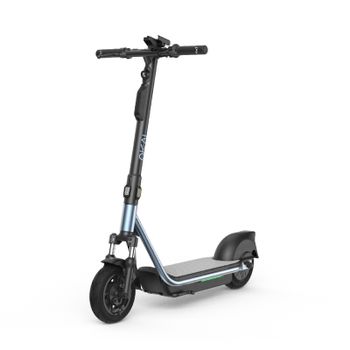
OKAI develops electric mobility solutions for shared and commercial applications, with product design focused on durability, technology integration, and fleet operation. For operators evaluating vehicles for shared mobility programs, weight capacity should be considered together with the broader requirements of the fleet.
Electric Scooter Weight Limit FAQ
What is the weight limit for most electric scooters?
There is no universal weight limit for electric scooters. Many commuter models support around 220 lbs (100 kg), while higher-capacity and commercial models may support 265–300 lbs (120–136 kg) or more. Always check the manufacturer's specification for the exact model.
Do electric scooters have a weight limit?
Yes. Electric scooters are designed and tested for a specified maximum load. The weight limit helps define the conditions under which the scooter's motor, frame, brakes, tires, suspension, and other components are intended to operate.
What happens if you exceed the weight limit on an electric scooter?
Exceeding the rated capacity can reduce acceleration and battery range and can increase stress on the motor, tires, suspension, braking system, and structural components. The exact effects depend on how much the limit is exceeded and the riding conditions.
How much weight can an electric scooter hold?
The answer depends on the specific model. Some electric scooters are rated around 220 lbs (100 kg), while higher-capacity models can support approximately 265–300 lbs (120–136 kg) or more. Always use the manufacturer's rated maximum load rather than a general industry estimate.
Is a 300 lb weight limit enough for an electric scooter?
A 300 lb (approximately 136 kg) rating may be suitable for some riders, but whether it is appropriate depends on the rider's total load and the intended operating conditions. Consider additional cargo, terrain, riding frequency, braking performance, suspension, and the manufacturer's recommendations.
Are there electric scooters for heavier riders?
Yes. Some electric scooters are specifically designed with higher load capacities and more robust components. When comparing models, look at the manufacturer's maximum load rating as well as frame construction, tires, suspension, brakes, and overall intended use.
Can a heavy person safely ride an electric scooter?
A heavier rider can use an electric scooter when the rider's total load is within the manufacturer's rated capacity and the scooter is appropriate for the intended conditions. If the rider exceeds the published capacity, a different model with a suitable rated load should be considered.
Electric Scooter vs. E-Bike for Heavier Riders
For some heavier riders, an electric bike may provide a different combination of stability, seating position, and load support. Electric scooters can offer advantages in portability and urban convenience, while e-bikes may be preferable when comfort, longer rides, or a different riding position are priorities.
If you are comparing the two vehicle types, read Electric Scooter vs E-Bike — Which Is Safer and More Suitable for Heavy Riders? for a more detailed comparison.
Conclusion
An electric scooter's weight limit is an important specification that affects much more than whether the motor can move a rider. Exceeding the manufacturer's rated capacity can reduce acceleration and range while increasing demands on the motor, battery, tires, suspension, brakes, and structural components.
The best approach is to choose an electric scooter based on its manufacturer-rated maximum load and the conditions in which it will be used. For individual riders as well as shared mobility and commercial fleet operators, matching vehicle capacity to the expected load can help support safer, more predictable, and more reliable operation.

Telefone: 1-800-660-3498
E-mail:
nihao@okai.co
(para fins comerciais)
b2bsupport@okai.co
(para suporte técnico)
Copyright © 2023 OKAI. Todos os direitos reservados.